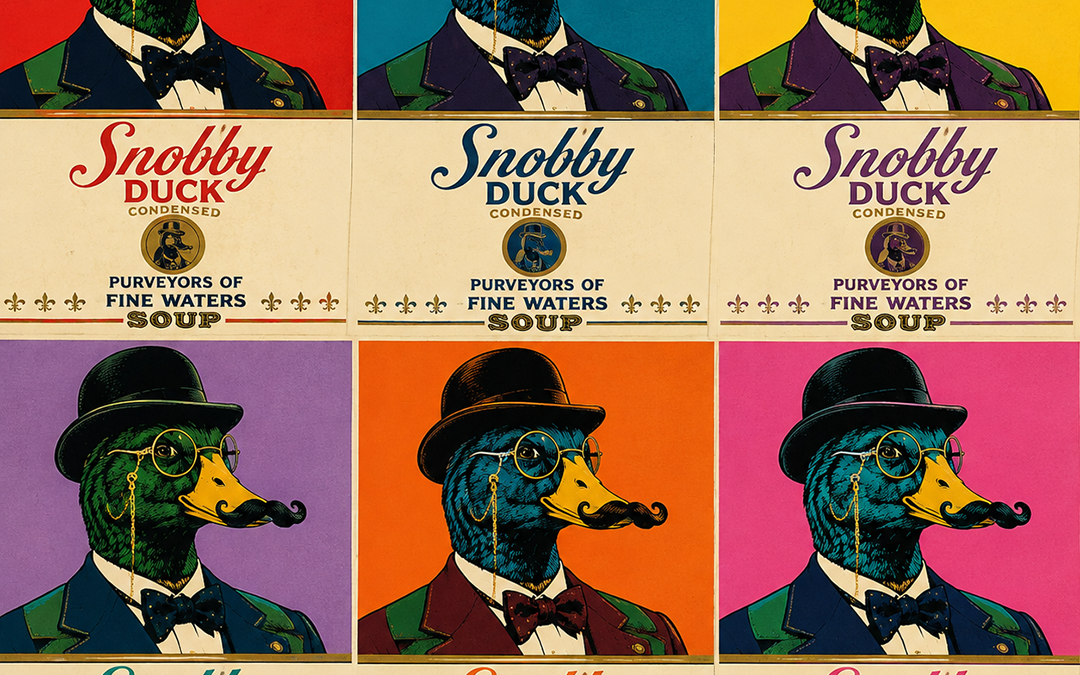
Sample Water Review 1
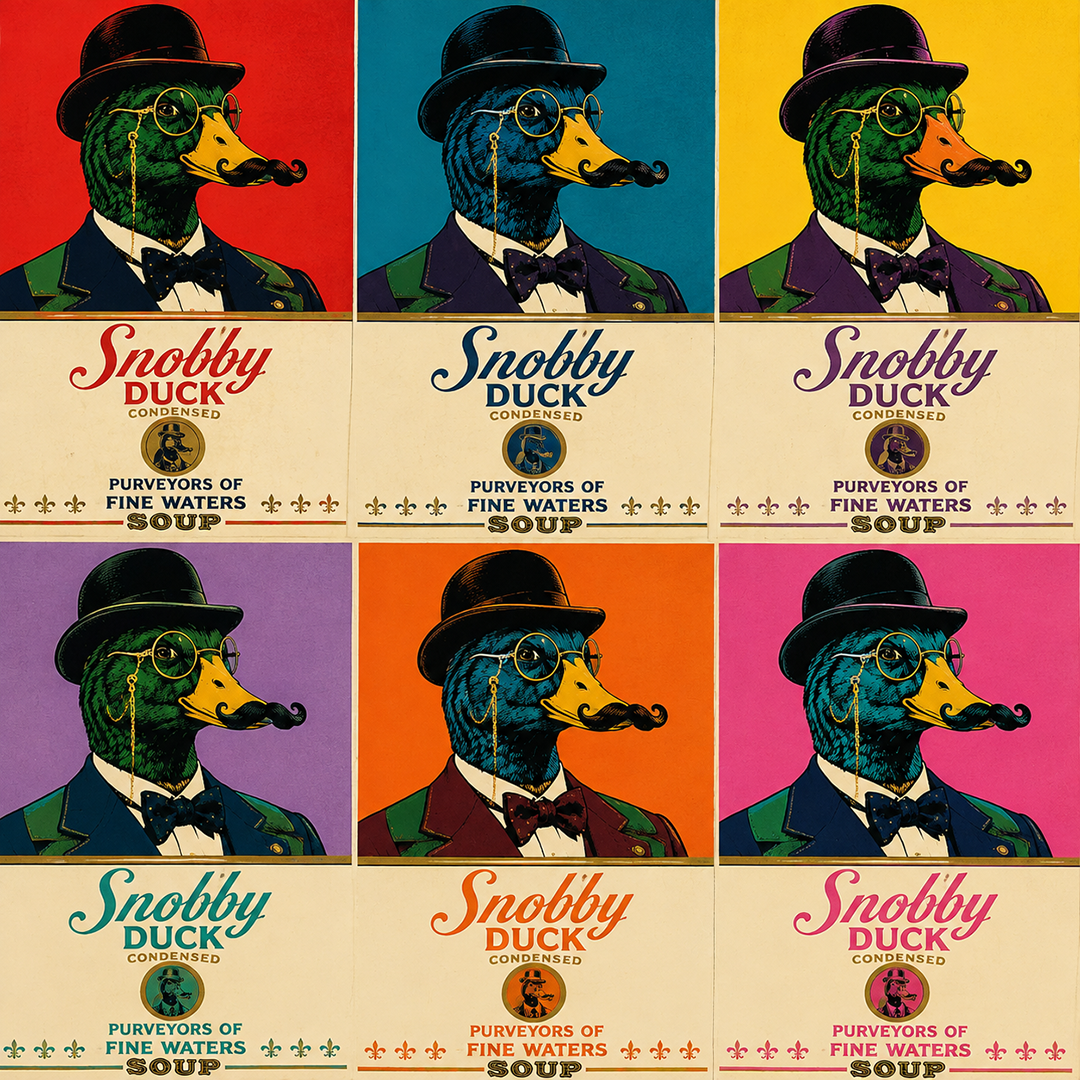

At Snobby Duck, we value happiness, health, and prosperity. That's why Snobby Duck has created Project Blue Pearl. A foundation where a % of EVERY purchase goes directly into the Project Blue Pearl fund, dedicated to bringing fresh drinking water to those in need.
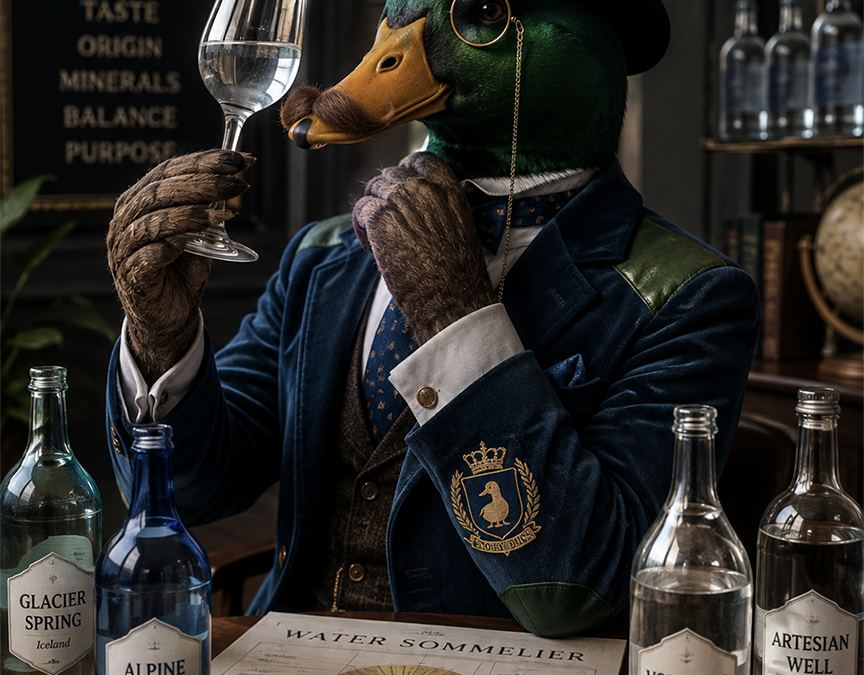
Becoming a water sommelier is a real specialty, although it is much less standardized than becoming a wine sommelier. The basic idea is to learn to evaluate water the way a wine professional evaluates wine—source, mineral composition, aroma, taste, mouthfeel, temperature, carbonation, terroir, and food pairing.
This is where water tasting becomes considerably more scientific than simply saying, "This water tastes good."
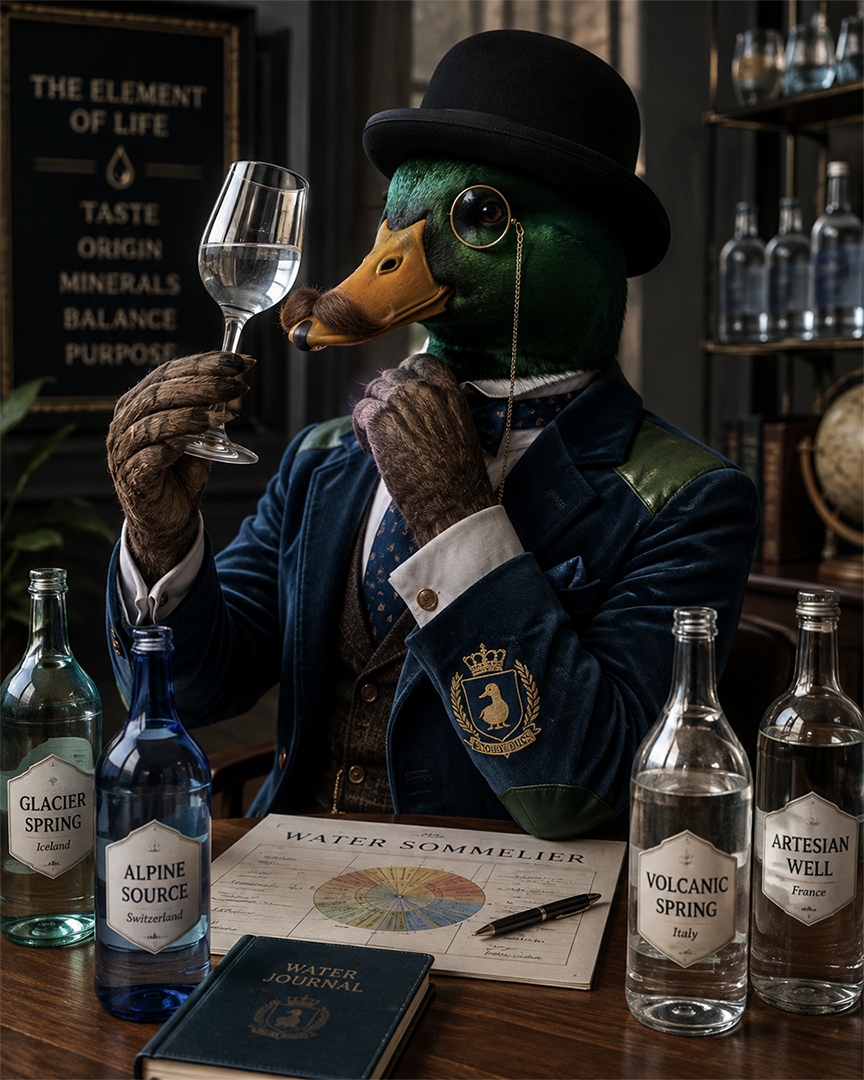
A good water sommelier should be able to explain why two waters from different geological environments taste different.
There are specialized water-sommelier programs. One of the best-known organizations associated with formal water-sommelier education is the Fine Water Academy, which offers education around fine-water tasting and water culture.
There are also water-focused courses and certifications offered by other organizations, so the credential landscape is not as universally standardized as wine's WSET/Sommeliership ecosystem.
This is where the profession becomes particularly interesting.
For example, a water professional might consider:
Light mineral water → delicate fish
Highly carbonated water → rich/fatty foods
High-bicarbonate water → certain heavier dishes
Low-mineral water → delicate dishes where you don't want the water competing with the food
The goal isn't necessarily to prescribe one "correct" water. It's to understand how water interacts with food.
I'd recommend keeping a formal tasting journal.
For every bottle, record:
| Category | What to evaluate |
| Source | Spring, aquifer, glacier, etc. |
| Origin | Country/region |
| Mineral profile | Ca, Mg, Na, bicarbonate, etc. |
| TDS | Dissolved mineral concentration |
| pH | Acidity/alkalinity |
| Carbonation | Still → highly sparkling |
| Aroma | Neutral, mineral, earthy, sulfurous, etc. |
| Taste | Sweet, salty, bitter, metallic, neutral |
| Mouthfeel | Soft, silky, crisp, heavy, sharp |
| Finish | Short, clean, lingering |
| Food pairing | Best culinary applications |
| Overall | Personal assessment |
You could learn the fundamentals in a few months, but becoming genuinely good at blind tasting and identifying mineral characteristics would require substantially more practice.
A serious path might look like:
Month 1–2: Water chemistry + tasting fundamentals
Month 3–4: Regional/source study + blind tasting
Month 5–6: Food pairing + professional tasting methodology
6–12+ months: Build a substantial tasting portfolio and pursue formal certification
You can find out more about the Snobby Duck Water Sommelier Certification HERE.
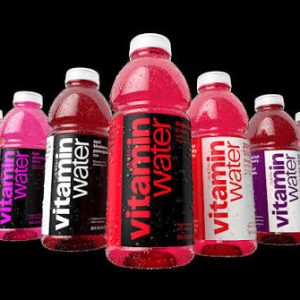 Vitamin Water
$2.12
Vitamin Water
$2.12
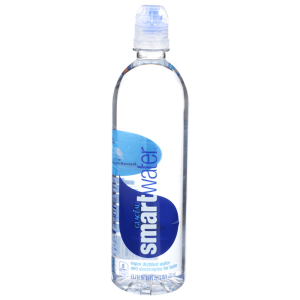 Smart Water
Original price was: $1.99.$1.49Current price is: $1.49.
Smart Water
Original price was: $1.99.$1.49Current price is: $1.49.
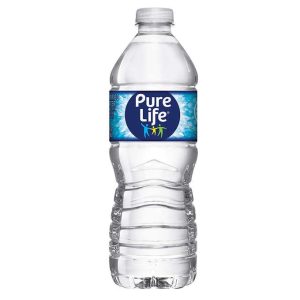 Pure Life
$2.09
Pure Life
$2.09